How Do Shipping Lines Operate in International Logistics?
When companies arrange an international shipment, many expect their cargo to move seamlessly from origin to destination. However, understanding how shipping lines actually operate is essential to avoiding delays, unexpected costs, and logistical issues.
Shipping lines work under a global operational model focused on:
- Cargo volume
- Route optimization
- Space profitability
- Operational efficiency
This means your container is part of a much larger and highly coordinated international logistics network.
Why Do Maritime Shipments Get Delayed?
Shipping delays are one of the most common challenges in international trade. In many cases, these delays are not caused by mistakes, but by the operational dynamics of the maritime industry itself.
Some of the main reasons include:
1. Priority Given to High-Volume Clients
Large-volume customers and long-term contracts often receive priority when space availability becomes limited.
2. Route and Schedule Adjustments
Shipping lines frequently modify routes and schedules to improve operational efficiency and optimize vessel capacity.
3. Overbooking and Space Reallocation
During periods of high demand, container space may be reassigned depending on operational priorities and cargo availability.
4. Port Congestion and Customs Processes
External factors such as port congestion, inspections, customs clearance, or weather conditions can also impact transit times.
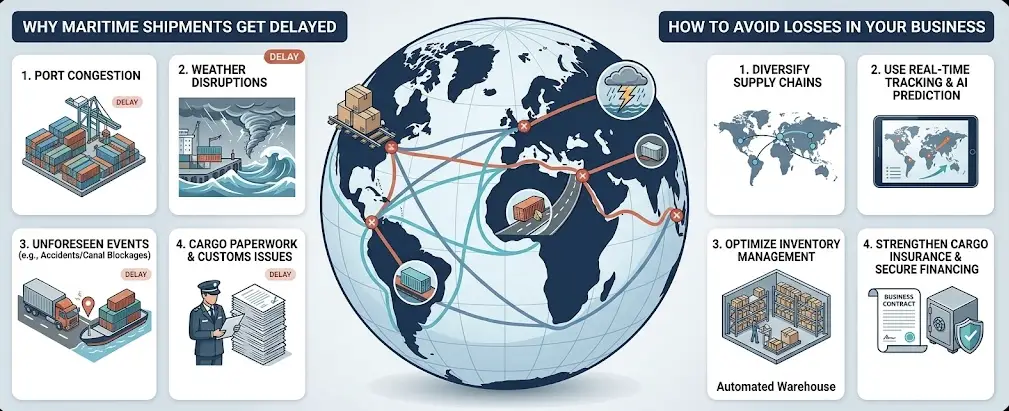
How to Reduce Risks in International Shipping
Although you cannot control how shipping lines operate, you can make smarter logistics decisions to minimize risks and delays.
Best practices include:
- Selecting the right shipping route and carrier
- Planning shipments in advance
- Maintaining visibility throughout the shipping process
- Working with experienced maritime logistics professionals
The Value of a Maritime Logistics Partner
A logistics partner does much more than simply coordinate cargo transportation.
Their role includes:
- Evaluating the most efficient shipping options
- Reducing operational risks
- Optimizing transportation costs
- Providing continuous shipment monitoring and support
This creates better shipping conditions and greater control throughout the entire logistics process.
Priska Containers Lines LLC — Your Maritime Logistics Partner
At Priska Containers Lines LLC, we understand how global shipping lines operate and use that knowledge to optimize every shipment.
We help businesses:
- Choose the most efficient transportation solutions
- Minimize unnecessary delays
- Reduce hidden logistics costs
- Maintain full visibility over their cargo